When you think of the ocean’s most impressive predators, from all shark species, the mako shark species should be at the top of your list. These incredible animals aren’t just another fish in the sea – they’re evolutionary masterpieces that have been perfecting the art of underwater hunting for millions of years. From their lightning-fast speeds to their acrobatic leaps, mako sharks represent everything that makes marine life absolutely fascinating.
But here’s what most people don’t realize: there’s so much more to these sharks than just their reputation as speed demons. Whether you’re curious about the difference between a bonito shark (another name for the shortfin mako) and other species, or you’re wondering about their conservation status, this guide will give you everything you need to know about these remarkable predators.
Meet the Mako Shark Family: How Many Species Are There?
Let’s start with the basics – how many mako shark species are there? The answer might surprise you. There are actually only two recognized species in the mako shark family:
- Shortfin Mako Shark (Isurus oxyrinchus) – also known as the blue pointer or bonito shark
- Longfin Mako Shark (Isurus paucus) – the rarer and more mysterious cousin
Both species belong to the Lamnidae family, which also includes white sharks and other lamnid sharks. This family connection explains why makos share certain characteristics with their more famous great white relatives, including their impressive hunting abilities and warm-blooded nature.
The mako shark scientific name Isurus literally means “equal tail,” referring to their distinctive mako shark tail structure. This tail design isn’t just for show – it’s the key to their incredible speed and agility in the water. The shortfin mako shark (Isurus oxyrinchus) is the more commonly encountered species, while the longfin mako shark represents a more elusive member of this family.

Physical Characteristics: What Makes Mako Sharks Special?
The Speed Machine Design
What makes a mako shark so unique? It all comes down to their incredible physical adaptations. These sharks are essentially the Formula 1 cars of the ocean, with every aspect of their body designed for maximum performance.
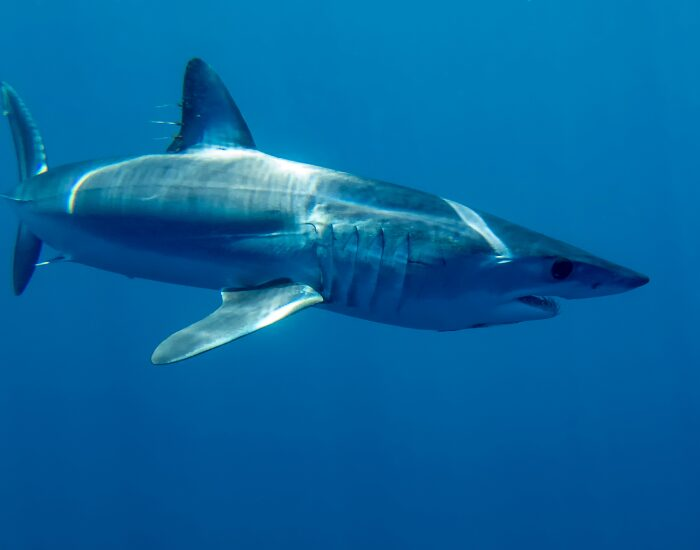
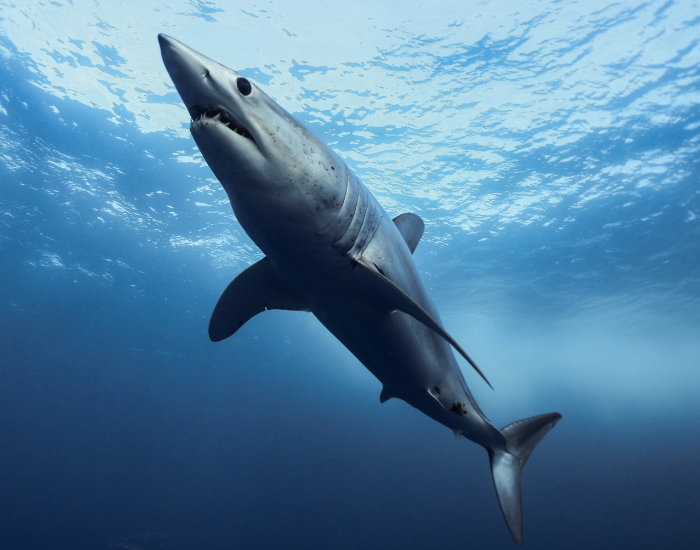
The shortfin mako’s torpedo-shaped body is a masterpiece of hydrodynamic engineering. Their pointed snouts cut through water with minimal resistance, while their metallic blue mako shark coloration on top and white underside below provide perfect camouflage. This counter-shading helps them blend seamlessly with both the bright surface waters above and the dark depths below.
Size Matters: How Big Can Mako Sharks Get?
People often ask, “How big can mako sharks get?” The answer varies between shark species:
Shortfin Mako Sharks:
- Average length: 6-10 feet (1.8-3.2 meters)
- Maximum recorded length: 13 feet (4 meters)
- Weight: Up to 1,250 pounds (570 kg)
Longfin Mako Sharks:
- Generally smaller than shortfin mako individuals
- Maximum length: Longfin makos are rarer and usually smaller, though they can reach up to 14 ft (4.3 m)
- More slender build overall
- Smaller shortfin makos are often confused with juvenile longfin specimens
The largest mako shark ever recorded was a massive shortfin mako shark specimen measuring over 13 feet long. However, unverified reports suggest some big mako shark individuals might reach even greater sizes.
The Perfect Predator Package
Beyond size, mako sharks possess several remarkable features:
- Large black eyes for excellent vision in various light conditions
- Razor-sharp teeth designed for gripping fast-moving prey
- Highly efficient gills that extract maximum oxygen from water
- Warm-blooded physiology that keeps their muscles at optimal temperature
- Larger pectoral fins in longfin species compared to shortfin mako varieties
Speed Demons: What Shark Swims at 60 MPH?
Here’s where mako sharks truly shine, their incredible speed. When people ask “What shark swims at 60 mph?” or “What shark can go 60 mph?” the answer is definitively the shortfin mako shark.
Shortfin makos have been clocked at bursts of 31–46 mph, though some estimates suggest they might reach higher speeds under ideal conditions. To put this in perspective, that’s faster than most boats and nearly as fast as a cheetah running on land.
But speed isn’t their only impressive athletic ability. Mako sharks are famous for their spectacular jumps, launching themselves up to 20 feet out of the water. This combination of speed and agility makes them formidable hunters and explains why they’re so prized by sport fishermen.
Global Citizens: Where Mako Sharks Live
Understanding where mako sharks live helps us appreciate just how adaptable these predators are. Mako sharks are truly global citizens, found in tropical and temperate waters around the world.
Shortfin Mako Habitat
Shortfin mako sharks are highly migratory species found in:
- Tropical seas and temperate seas worldwide
- Atlantic, Pacific, and Indian Oceans, including the central Pacific
- They usually hunt in the upper 500 ft but are capable of diving much deeper — sometimes over 1,000 ft.
- Temperate latitudes and tropical waters near the continental shelf
- Coastal waters and open ocean environments
- Areas monitored by at sea observers for research purposes

Longfin Mako Distribution
Longfin makos are rare and have a more limited range:
- Primarily tropical and temperate waters
- Deep offshore waters
- Less commonly encountered than their shortfin cousins
These sharks don’t stay put – they’re constantly on the move. Some individuals travel thousands of miles annually, following prey species and temperature gradients. This highly migratory behavior makes them challenging to study and protect.
Diet and Hunting: Apex Predators in Action
Mako sharks are apex predators with incredibly diverse diets. Their speed and agility allow them to catch prey that slower sharks can’t even attempt to pursue.
Primary Prey Species
- Bony fishes including tuna, mackerel, and sardines
- Squid and cuttlefish
- Other species of smaller sharks
- Sea lions and other marine mammals (occasionally)
- Even swordfish and marlin – impressive prey for any predator
Hunting Strategies
Mako sharks employ various hunting techniques:
- Burst speed attacks – Using their incredible speed to catch fast-moving fish
- Ambush predation – Attacking from below using their camouflaged coloring
- Opportunistic feeding – Taking advantage of whatever prey is available
- Deep water hunting – Following prey to different depths
The fact that makos can successfully hunt swordfish – themselves formidable predators – demonstrates just how capable these sharks are.
Human Interactions: Are Mako Sharks Aggressive?
One of the most common questions people ask is “Are mako sharks aggressive?” or “Are makos friendly?” The truth is more nuanced than simple yes or no answers.
Understanding Mako Behavior
Mako sharks are powerful predators, but they’re not mindlessly aggressive toward humans. Attacks on humans by makos are extremely rare. When incidents do occur, they’re typically cases of mistaken identity or involve provoked animals.
Has a mako shark ever attacked a human? Yes, but these incidents are uncommon. Most documented cases involve:
- Fishing-related encounters
- Mistaken identity situations
- Defensive responses when the shark feels threatened
The Reality of Risk
To put this in perspective, you’re statistically more likely to be struck by lightning than attacked by a mako shark. These animals generally avoid human contact and prefer to focus on their natural prey.
Are mako sharks nice to humans? While “nice” might not be the right word for any wild predator, makos typically show little interest in humans and will usually swim away when encountered.

Conservation Challenges: A Species Under Pressure
Unfortunately, mako shark species face significant conservation challenges. Both shortfin and longfin makos are currently listed as Endangered by the IUCN.
Threats Facing Mako Sharks
- Commercial Fisheries – Makos are valuable targets for their meat and fins
- Drift Gillnets and other fishing gear cause accidental captures
- NOAA Fisheries data shows concerning population declines
- Slow reproduction rates make recovery difficult
- Climate change affecting prey distribution and habitat
The Role of NOAA Fisheries
NOAA Fisheries plays a crucial role in mako shark conservation through:
- Implementing catch limits and fishing regulations
- Monitoring population trends
- Supporting shark research initiatives
- Working with international partners on conservation efforts
- Educating the public about these threatened species
The agency’s work is particularly important because makos are highly migratory pelagic species that cross international boundaries, requiring coordinated global management efforts.
Distinguishing Features: How to Identify Mako Sharks
Knowing how to identify a mako shark can be useful for anyone spending time on the water. Here are the key identification features:
Shortfin Mako Identification
- Metallic blue back with white underside
- Pointed snouts with sharp, visible teeth
- Large black eyes
- Short pectoral fins (hence “shortfin”)
- Crescent-shaped tail fin
- Streamlined, torpedo-shaped body
Longfin vs. Shortfin Differences
What is the difference between shortfin and longfin makos?
- Longfin makos have notably longer pectoral fins
- Longfins have larger eyes relative to body size
- Shortfins are generally more robust and larger
- Longfins prefer deeper waters
Common Confusion: Blue Sharks vs. Makos
Is a blue shark the same as a mako shark? No, they’re completely different species. While both are blue-colored sharks, blue sharks are much more slender, have longer pectoral fins, and are generally less aggressive than makos.
The Cultural Connection: Tiburón Mako Around the World
The mako shark’s impact extends beyond biology into human culture. In Spanish-speaking regions, these sharks are known as “tiburón mako,” and they hold significant cultural importance in many coastal communities.
Global Recognition
From Ernest Hemingway’s famous depiction in “The Old Man and the Sea” to modern sport fishing tournaments, mako sharks have captured human imagination worldwide. Their combination of speed, power, and acrobatic ability makes them legendary among anglers and marine enthusiasts.

Research and Scientific Understanding
Modern shark research has revealed fascinating insights about mako sharks that continue to surprise scientists. Recent studies using satellite tagging have shown that some makos dive to depths of over 3,000 feet and can travel across entire ocean basins.
Key Research Findings
- Makos can maintain body temperature several degrees above surrounding water
- They have complex migration patterns tied to prey availability
- Juvenile mako sharks have different habitat preferences than adults
- These sharks play crucial roles in marine ecosystem balance
Research institutions and NOAA Fisheries continue studying these remarkable predators to better understand their ecology and improve conservation efforts.
Conservation Success Stories and Future Outlook
Despite the challenges, there are encouraging signs for mako shark conservation. International cooperation through organizations like ICCAT (International Commission for the Conservation of Atlantic Tunas) has led to improved management measures.
Positive Developments
- New international fishing quotas for mako sharks
- Improved monitoring of commercial drift gillnet vessels
- Increased protection in several marine protected areas
- Growing public awareness about shark conservation
Catching Protected Species Regulations
Stricter regulations around catching protected species have been implemented in many regions. These include:
- Mandatory release requirements for recreational fishermen
- Enhanced monitoring of commercial fishing operations
- Penalties for violations involving threatened species
The Future of Mako Shark Species
Looking ahead, the fate of mako shark species depends largely on our collective actions. These incredible predators have survived for millions of years, adapting to countless environmental changes. However, the current rate of human impact presents unprecedented challenges.
What You Can Do
- Support sustainable seafood choices
- Advocate for stronger shark protection measures
- Educate others about the importance of shark conservation
- Support organizations working to protect marine ecosystems
Why Mako Sharks Matter
Mako shark species represent some of nature’s most remarkable achievements in evolutionary design. From their incredible speed capabilities to their crucial role as apex predators, these sharks help maintain the delicate balance of marine ecosystems worldwide.
Understanding and protecting mako sharks isn’t just about preserving impressive predators – it’s about maintaining healthy oceans for future generations. These highly migratory species serve as indicators of ocean health, and their decline signals broader environmental challenges that affect us all.
Whether you know them as bonito sharks, blue pointers, or simply tiburón mako, these incredible animals deserve our respect and protection. By supporting conservation efforts and making informed choices about ocean resources, we can help ensure that future generations will have the opportunity to marvel at these extraordinary speed demons of the sea.
The next time you’re near the ocean, remember that somewhere out there, mako sharks are racing through the waves at incredible speeds, playing their vital role in the complex web of marine life. They’ve earned their place as some of the ocean’s most spectacular residents, and with proper conservation efforts, they can continue to inspire and amaze us for generations to come.